

TINUBU Signs 2026 Budget, Extends 2025 Till June
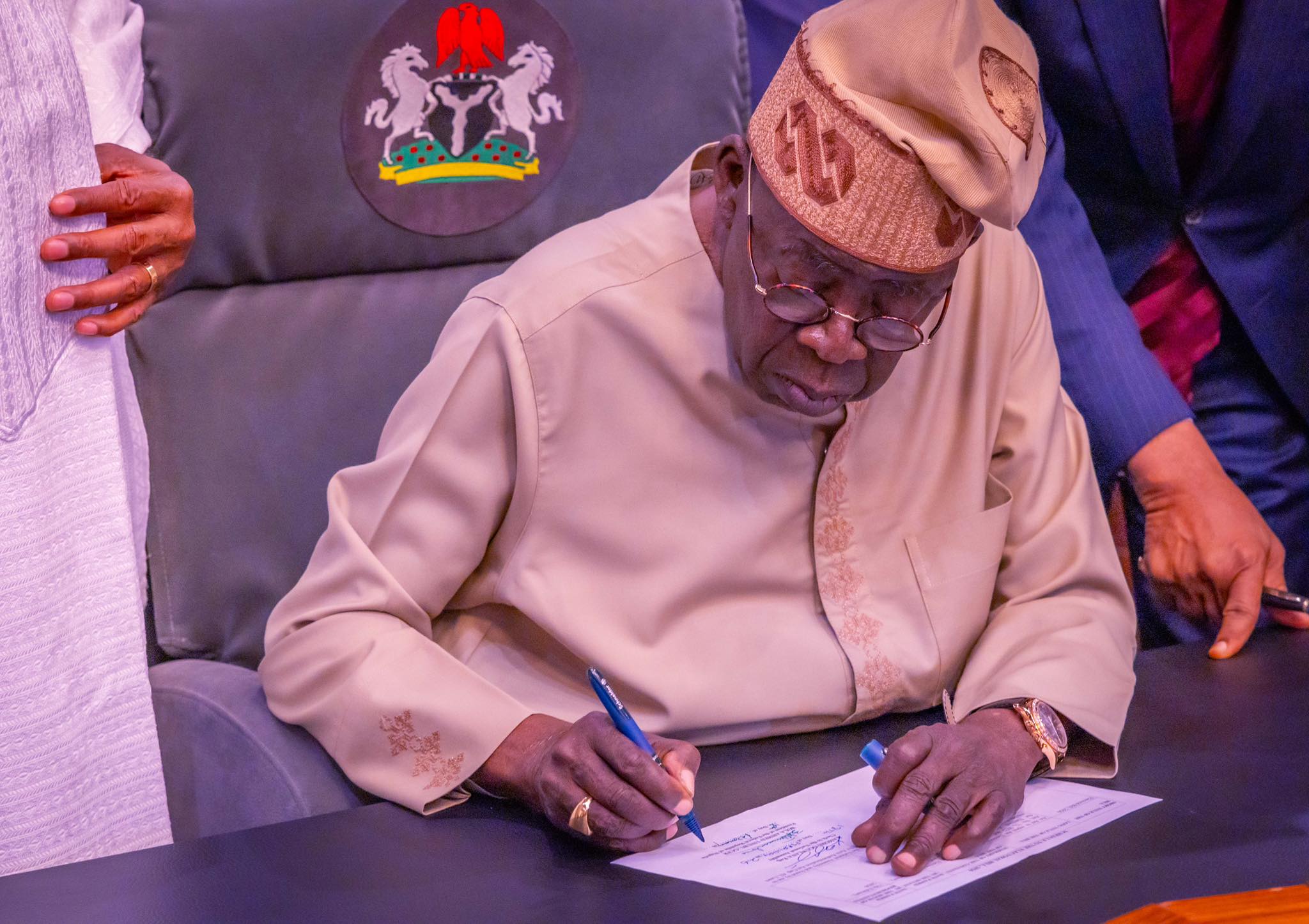
President has signed the 2026 Appropriation Bill into law, thereby authorizing an aggregate expenditure of Sixty-Eight-Three-Two Trillion Naira.
The 2026 Budget allocates Thirty-Two-Point-Two Trillion Naira for Capital Expenditure, with Fifteen-Point-Four Trillion Naira dedicated to Recurrent Expenditure.
Also, the 2026 Budget provides Four-Point-Nine-Nine Trillion Naira for Statutory Transfers, while Debt Servicing will gulp Fifteen-Point-Eight Trillion Naira.
President TINUBU also signed the 2026 Appropriation Repeal and Enactment Amendment) Bill, thereby approving further extension of the 2025 Budget from March 2026, to June 2026.
Special Adviser to the President on Information and Strategy, BAYO ONANUGA, said the further extension of the 2025 Budget will ensure the full and effective utilisation of appropriated funds.
Confirming the developments in a statement, ONANUGA said the move would enable Ministries, Departments, and Agencies to consolidate ongoing projects, enhance completion rates, and maximise value for public expenditure.
He stated that “With the 2026 Appropriation Act coming into force on April 1, the Federal Government will commence full implementation in line with the Renewed Hope Agenda.”
BAYO ONANUGA further noted that President TINUBU directed MDAs to ensure disciplined, transparent, and efficient utilisation of allocated resources, with a strong emphasis on value for money and timely project delivery.
“He commended the leadership and members of the National Assembly for their diligence, cooperation, and patriotism in expeditiously considering and passing the budget.
“The President reaffirmed the importance of sustained collaboration between the Executive and Legislative arms of government in advancing national development objectives.
“He further assured Nigerians of his administration’s resolve to deepen fiscal reforms, enhance revenue generation, and prioritise investments that will stimulate economic growth, create jobs, and strengthen social protection mechanisms.”