

Democracy Day: TINUBU Pays Tributes to June 12 Heroes, Highlights Achievements
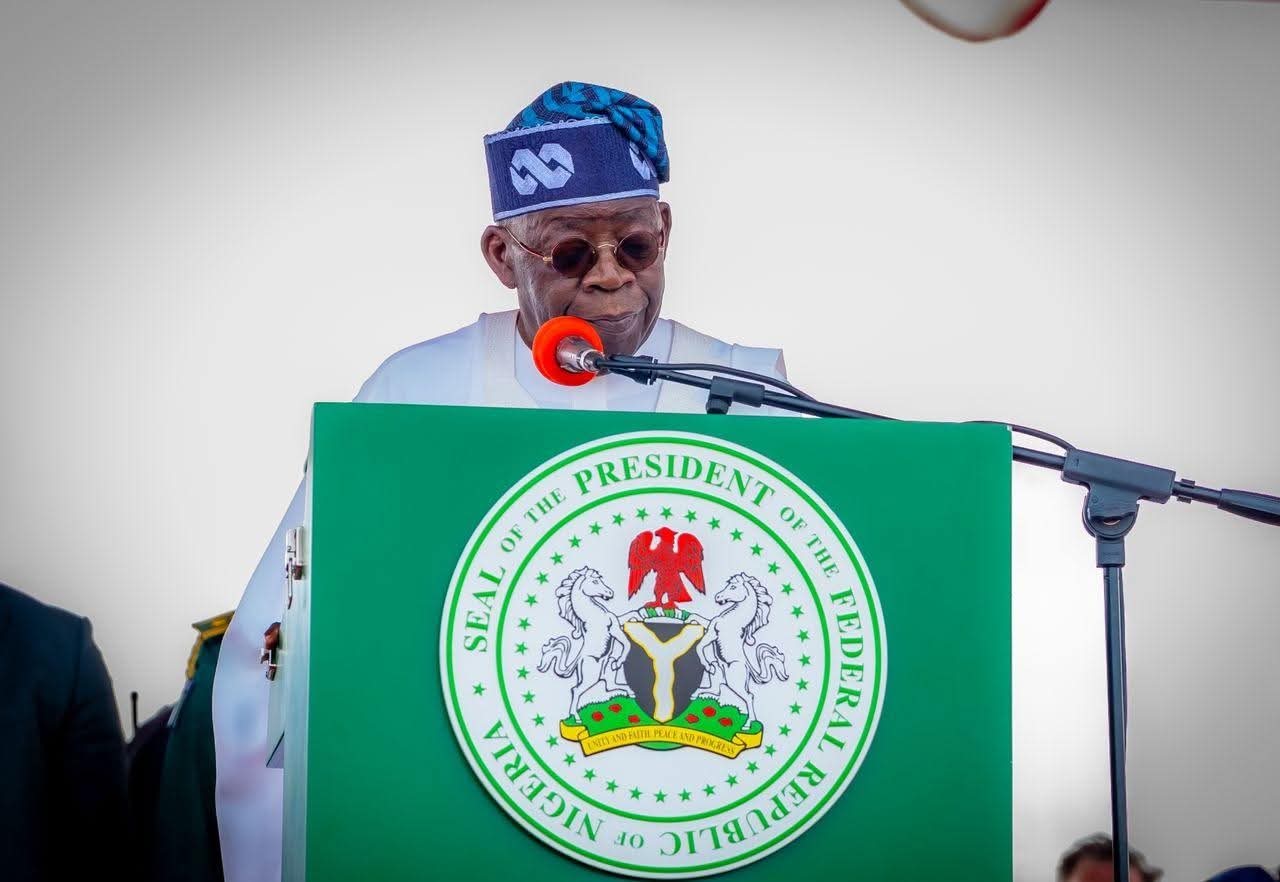
President BOLA AHMED TINUBU has paid tributes to Nigerian leaders, past and present, who fought for the entrenchment of democratic governance in the country.
President TINUBU acknowledges that Nigeria’s democracy is not perfect, stressing that it is the responsibility of Nigerians to defend and strengthen it.
The President shared his thoughts in his televised state-of-the-nation address to Nigerians on the occasion of the 2026 Democracy Day celebration.
After twenty-seven-years of the current democratic dispensation, President TINUBU reminded Nigerians that democracy fails when citizens doubt the process.
He identified the National Assembly, Judiciary, the Press, and the Civil Society as the guardrails of the republic, stressing that Nigerians may criticise and disagree with his leadership, but must never stop believing in Nigeria.
The President reminded young Nigerians that the country was their home and future, urging them to work, build and vote here, just like every great nation was built by those who stayed to solve problems.
“Today, we honour the resilience of Nigerians who refused to surrender their faith in freedom, and the courage of those who stood firm against intimidation. We pay tribute to patriots who endured persecution, imprisonment, exile, and even death so that future generations could enjoy democracy. I salute labour leaders, journalists, activists, students, women, professionals, political leaders, and soldiers—both those who have passed and those still with us—for their patriotic contributions.”
President TINUBU acknowledged that the mood for this year’s Democracy Day is dampened by the abduction of schoolchildren in Oyo and Borno.
TINUBU equally admitted that democracy without security is not solid enough, which is why his administration declared a security emergency and approved the recruitment of more than fifty thousand new police officers and thousands of military recruits.
“Our 2026 budget commits N5.41 trillion—our largest ever—to defence and security. Our administration is ever ready to do much more to secure our people.”
He said the security and defence forces have moved from training with allies, such as the United States, France and other European countries, to precision targeting of terrorists and bandits threatening the nation.
“In Arege, Borno State, we degraded ISWAP’s command centre. Terror-related deaths are down by 81% since 2015. Over 13,000 terrorists have been neutralised in the past year. But we also keep the door of surrender open. Over 124,000 fighters and dependents have laid down their arms since 2023 through Operation Safe Corridor.
“To bandits, kidnappers, and sponsors of terror: Surrender or face the full force of the Nigerian State. These windows of surrender will not remain open forever. No mercy will be shown to those who trade in the blood of Nigerians.
The Nigerian leader said now was not the time to assign blame or point fingers, stressing that crime has no ethnicity, but a period to stand united against the enemies of the nation.
President BOLA AHMED TINUBU also used his Democracy Day broadcast to highlights the achievements of his administration in the past three years, recalling that he came into office when public finances were under severe strain, investment was discouraged, and economic uncertainty threatened the future of the nation.
“Since 2023, our reforms have restored stability and credibility to economic management. Federation revenues have risen, providing states and local governments with more resources for infrastructure, education, healthcare, and security. Fiscal transparency has improved, leakage has been reduced, and public funds are better directed to national priorities. Investor confidence has returned, with investments in agriculture, energy, manufacturing, technology, mining, transportation, and the creative industries growing.
“Domestic refining capacity has increased, strengthening energy security and reducing our reliance on imported petroleum products.
“By 2023, when we came on board, the electricity sector was characterised by chronic generation shortfalls, an unreliable gas supply, and transmission infrastructure so fragile that it could not evacuate available power. Distribution companies were burdened by massive losses and a metering deficit of over four million. Worst of all, the value chain was drowning in legacy debt. The result was a sector that generated less than the 13,500 Megawatts installed capacity, a sector that transmitted less than it generated, distributed less than it transmitted and collected revenue far below what it needed to sustain itself.
“To address the problems besetting the sector, I signed the Electricity Act, which grants states authority to generate, transmit, and distribute power. The Presidential Power Sector Task Force is working hard to reduce the metering deficit. It has also been authorised to raise N4 trillion bond to settle verified legacy debts. The Rural Electrification Agency, supported by the World Bank and the African Development Bank, has deployed off-grid and mini-grid power to underserved communities, universities, markets, and hospitals. Electricity is a democratic dividend we owe every Nigerian. We intend to deliver it.
Across the country, infrastructure projects are connecting producers to markets and creating opportunities for enterprise and employment. The National Agricultural Development Fund is deploying 10,000 tractors over five years. Over 1,000 SMEs have been certified for export. Non-oil exports grew by 21% last year.”
President TINUBU acknowledged that many Nigerians still face economic hardship, and assured that his administration remained focused on reducing inflation, expanding food production, creating jobs, improving living standards, rebuilding confidence in our economy, and creating conditions for sustainable prosperity.
“We are moving from uncertainty to stability. The next phase is about accelerating growth and ensuring the benefits are felt in every home, every community, and every region. We believe that Democracy must be felt in the pocket.
“Recognising that democracy is undermined when people do not feel its impact, my administration has sought financial autonomy for our 774 local councils. A fundamental challenge to our nation’s advancement has been ineffective local government administration. The insecurity we are addressing is partly due to the collapse of grassroots governance. The Renewed Hope Agenda is about ensuring that all Nigerians benefit from governance.
“Every generation has a defining responsibility. The generation of our founding fathers secured independence—the generation of June 12 secured democracy. Our generation must secure prosperity.
"Let us move forward together—rejecting division, cynicism, and despair; embracing unity, hope, and confidence. Let us build a Nigeria united by a common purpose, strengthened by diversity, where justice is accessible, liberty is secure, and opportunity is abundant.