

Presidency Clapback Over Cardinal ONAIYEKAN's Criticism of Tinubu Administration
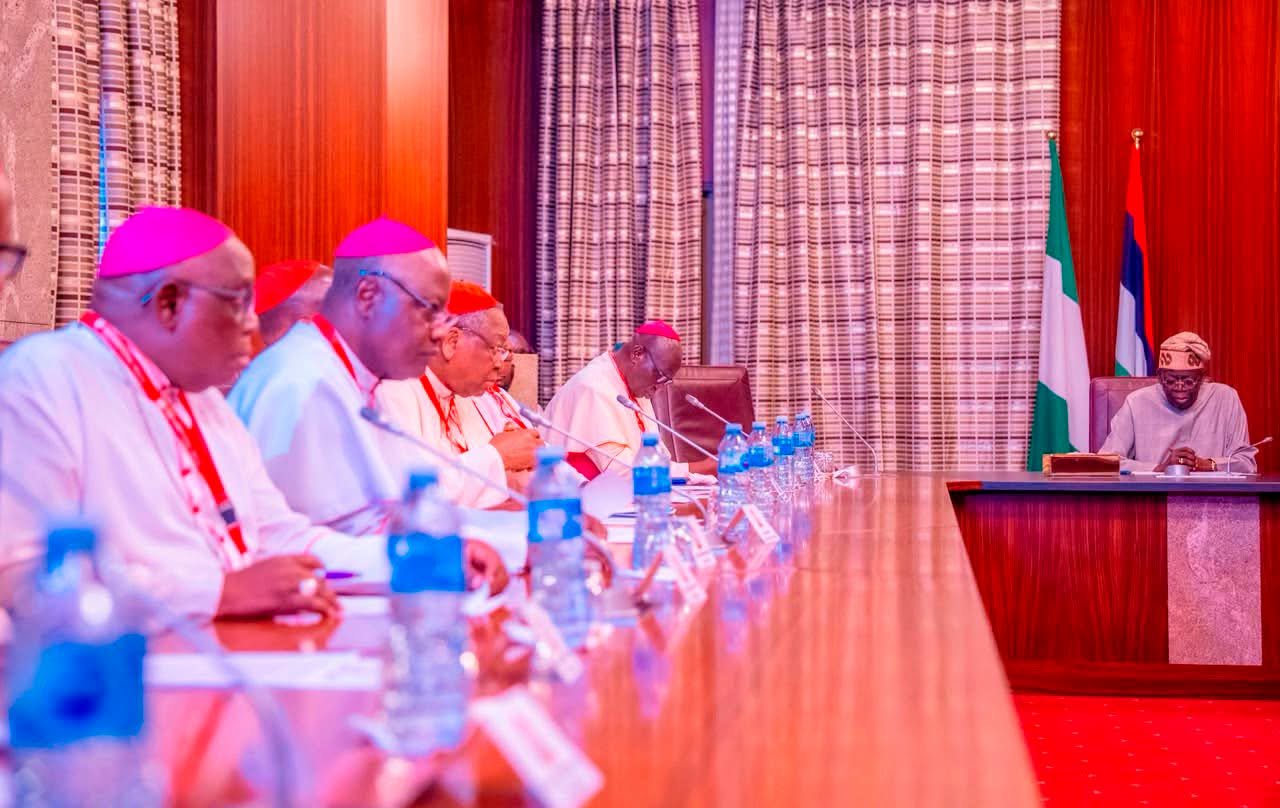
The Presidency has strongly criticized popular Catholic cleric, Cardinal JOHN ONAIYEKAN, the Archbishop Emeritus of the Catholic Diocese of Abuja, over his uncomplimentary comments about President BOLA AHMED TINUBU and his administration.
This follows a television interview granted by Cardinal ONAIYEKAN soon after a meeting between President BOLA AHMED TINUBU and members of the Catholic Bishops Conference of Nigeria.
During the interview on Arise News primetime programme, Cardinal ONAIYEKAN explored the conversation between President TINUBU and the Catholic Bishops and went on express his personal observations. He said President TINUBU appeared bent on winning a second term in office in the 2027 general elections by all means.
Cardinal ONAIYEKAN observed that even with a free and fair election, the votes of the people may not count, adding that those in the ruling party have a lot of means at their disposal which they are deploying.
He said during the meeting at the State House in Abuja on Tuesday, July 28, 2026, President TINUBU rejected concerns by the Catholic clergy on a number of issues, including the economy, insecurity and the political climate in the country.
The Catholic cleric said: “When the nation is bleeding, you cannot expect a polite meeting with the Head of State. We had to let him know. And his reply is that the nation is not bleeding. We told him the economy is not helping our poor people; he told us the economy is doing fine. Frankly speaking, he told us quite clearly that he did not agree with us.”
However, the Presidency reacted harshly to Cardinal ONAIYEKAN’s comments, with the Senior Special Assistant to President on Media and Publicity, TEMITOPE AJAYI, accusing him of “abuse of clerical privilege”.
In a statement released a day after Cardinal JOHN ONAIYEKAN’s interview, AJAYI noted that “there is something fundamentally inappropriate about granting a television interview to offer his own account and interpretation of what transpired during the private meeting between the Catholic Bishops' Conference of Nigeria and President Bola Tinubu”.
AJAYI stated that the Catholic Bishops had during the meeting with President TINUBU, presented a catalogue of economic, social, and security challenges, grudgingly acknowledging the benefits of NELFUND, while dismissing other “great things done by the administration”.
He stated that “the bishops were notably acerbic in their submission”, and that none of the issues raised by the bishops is beyond scrutiny or rebuttal. “Their assessment is neither scripture nor an article of faith. It is a perspective, and perspectives can be challenged with facts and evidence”.
The spokesman said among other points, President TINUBU faulted the bishops’ characterisation of the country's current condition, arguing that it was inaccurate, in several respects.
“He pointed to measurable progress on the economic, social, and security fronts. He did not pretend that Nigeria's problems had disappeared. He acknowledged that significant economic and security challenges remain, the spokesman noted.
TEMITOPE AJAYI asserted that the clerics often overlook that governing a country is fundamentally different from shepherding a church. “In a democracy, every interest group, including the Catholic Church, has every right to demand more from government. That is part of democratic engagement”.
AJAYI said as the President of a nation of more than two hundred million people, TINUBU is required to make difficult choices every single day. “Those choices involve competing interests, limited resources, and imperfect options. They will inevitably disappoint some constituencies. There is no president, whether Tinubu or whoever succeeds him, who can wave a magic wand and make Nigeria's accumulated problems disappear overnight”.
He said while it is easy to compile a list of national problems, it is far more difficult to acknowledge the disasters that have been averted. “Whatever anyone thinks of President TINUBU’s policies, it is impossible to ignore the fiscal crisis he inherited, and the measures taken to pull the country away from the edge of a financial cliff”.
The SSA to the President on Media and Publicity said when President TINUBU reminded the bishops of the facts of what his administration has been able to accomplish, “he was not, as Cardinal ONAIYEKAN later suggested, being aloof or dismissive”. He said the President “was presenting evidence to support his argument that the country is not standing still, adding that “a disagreement over facts should not be interpreted as arrogance”.
“The same applies to security. The bishops declared that Nigeria is bleeding. The President thinks otherwise. President Tinubu did not deny the seriousness of the security situation. Rather, he acknowledged the challenge while outlining the gains recorded by the Armed Forces and intelligence agencies across different theatres of operation.
“As Commander-in-Chief, he receives operational briefings, intelligence assessments, and battlefield reports unavailable to the general public. The bishops, like other Nigerians, rely largely on media reports and public information. That does not make the President infallible, but it does mean he possesses information unavailable to the generality of the people. It is, therefore, legitimate for him to argue that the overall picture is more nuanced than newspaper headlines sometimes suggest”.
Stating further, he said “the Catholic Bishops discharged what they considered their moral obligation by presenting their concerns to the president. President Tinubu, for his part, accorded them respect by granting them an audience and responding to every issue they raised. That exchange reflected the civility expected in a constitutional democracy.
“Reciprocity should have dictated that the confidentiality and dignity of that engagement be preserved. As such, it was inappropriate for one of the participants to emerge almost immediately on national television to provide his own version of what was essentially a private conversation with the president. Clerical office carries privileges, but it also imposes obligations. Among the qualities the Scriptures require of bishops are temperance, maturity, self-restraint, and the wisdom to remain above needless public controversy. Those virtues become even more important when dealing with matters of state. Public influence should be exercised with discretion, not by converting privileged access into a platform for post-meeting commentary.”